




Price: [price_with_discount]
(as of [price_update_date] – Details)
[ad_1]
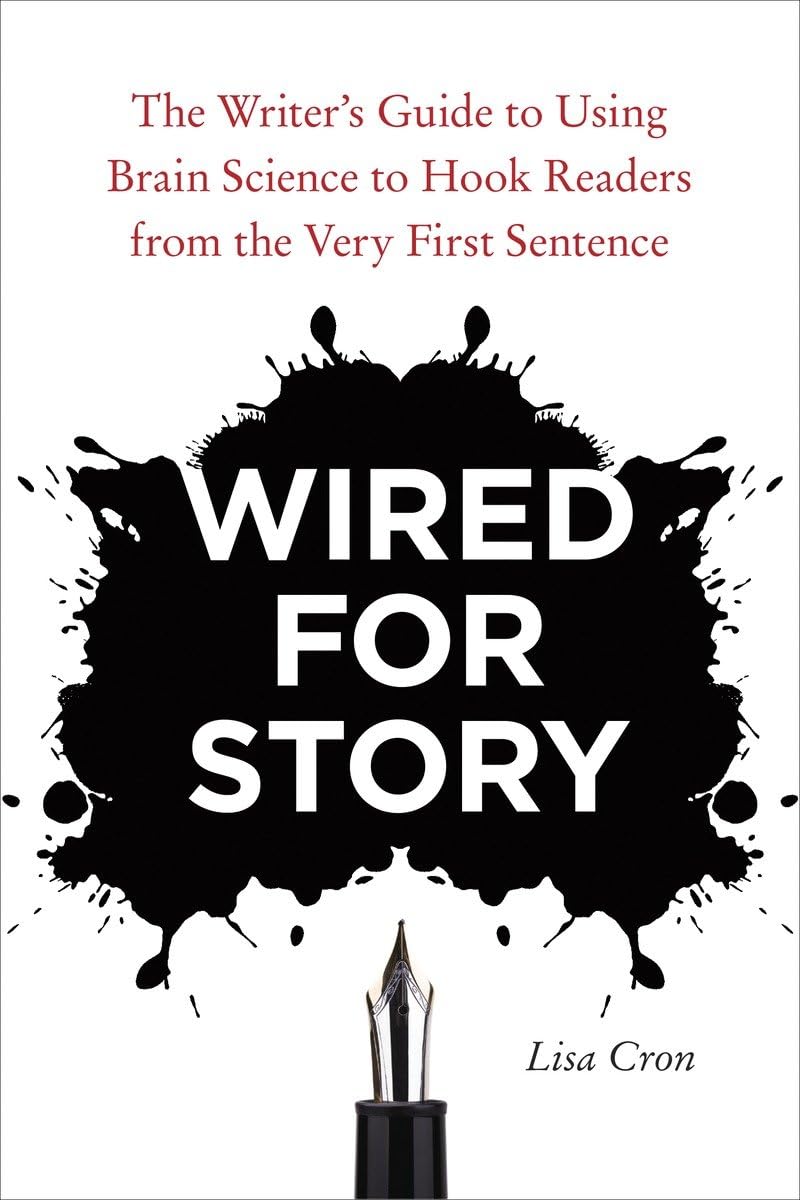
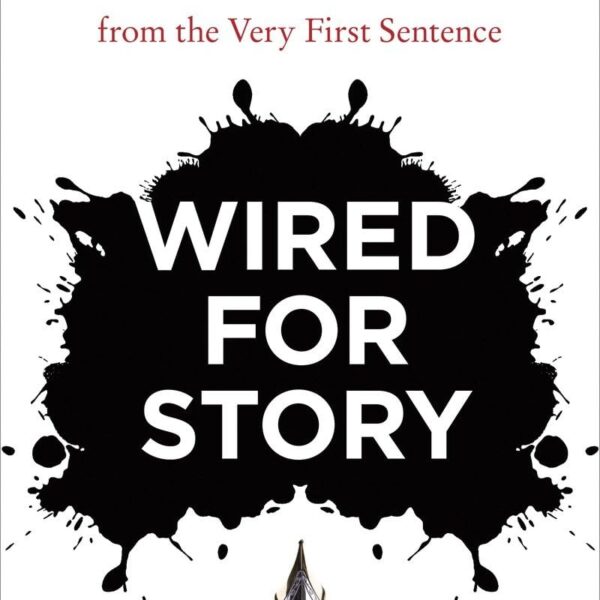
This guide reveals how writers can utilize cognitive storytelling strategies to craft stories that ignite readers’ brains and captivate them through each plot element.
Imagine knowing what the brain craves from every tale it encounters, what fuels the success of any great story, and what keeps readers transfixed. Wired for Story reveals these cognitive secrets—and it’s a game-changer for anyone who has ever set pen to paper.
The vast majority of writing advice focuses on “writing well” as if it were the same as telling a great story. This is exactly where many aspiring writers fail—they strive for beautiful metaphors, authentic dialogue, and interesting characters, losing sight of the one thing that every engaging story must do: ignite the brain’s hardwired desire to learn what happens next. When writers tap into the evolutionary purpose of story and electrify our curiosity, it triggers a delicious dopamine rush that tells us to pay attention. Without it, even the most perfect prose won’t hold anyone’s interest.
Backed by recent breakthroughs in neuroscience as well as examples from novels, screenplays, and short stories, Wired for Story offers a revolutionary look at story as the brain experiences it. Each chapter zeroes in on an aspect of the brain, its corresponding revelation about story, and the way to apply it to your storytelling right now.
Publisher : Ten Speed Press; 40065th edition (July 10, 2012)
Language : English
Paperback : 272 pages
ISBN-10 : 1607742454
ISBN-13 : 978-1607742456
Item Weight : 2.31 pounds
Dimensions : 5.5 x 0.72 x 8.25 inches
Customers say
Customers find the book insightful and useful for writing compelling stories. They find it worthwhile and a fun read that captures readers’ attention. The humor, pacing, and character development are also appreciated.
[ad_2]
Related Products



Martijn13Maart1970 –
Unfortunately yet another one to add on the pile of writing books!
I say ‘unfortunately another good book on writing’ since I have been reading many books on the topic and each time I think I have read it all by now, pfff, but then another one like this comes along. But hey, it is fun to read about writing and especially if you get something useful and new out of it. Always worth the money.Why the accolades for this book?All the information on characters, plot, details etc, how they work and why they are important, is not new. You find them in many reading books, especially from Reader’s and Writer’s Digest series. I would especially recommend the books on plot and structure by James Scott Bell.Yet this book Wired For Story is not redundant, since it is unique in both the focus on the familiar subjects like what story is, the importance of details, details versus generics, how events affect a character etc. The approach of using brain science shows in a compelling way why all the stuff in the book (and for that matter, the classic theory on writing) is there for a reason, since it has evolved out of how we humans seem to perceive a story. Interesting though, a lot of rules like ‘write about what you know’ are shown to be myths.Of course, in the end it is you as a reader that has to decide what works for you, but you will find new things here and that is always good.If you are thinking about writing a story, this book can give you a very sharp focus on what to think about before you start. Or, like me, when you have a draft, and you want to get to the ‘real story’ behind it to come forward, this work gives you a very transparent way to get better clues as to what stays and what has to go.It is also entertaining and easy to read, so, all I can say is, yet again a book on writing you cannot afford to miss!I just added some extra information: I loved the humor and wisdom of the writer. She has worked for years reading manuscripts and she does know her stuff, and I liked her tone, which was both realistic but also fun! How many times have you read a reference work and actually had to laugh? But this book was also profound on many story issues. Many common writing rules are, as I said before, shown to be myths and more importantly, why this is so. I have read for instance so often that you should have some sensory info on every page, but, as I thought myself and I am not the only one: although this makes things more lively, it should only be there if the story would dictate it! The book has many more things like these.I have compiled a collection of notes I took from all the many many books on writing so I measure new books on writing in how much text I copied and pasted to look at again and this book has given me lots, so 5 stars and I hope we will see more of this author again!I also recommend the book by James Scott Bell on plot and structure which you can find herePlot & Structure: (Techniques And Exercises For Crafting A Plot That Grips Readers From Start To Finish) (Write Great Fiction)
Matt M –
Will reading Wired for Story really make you smarter?
In my 36th year as a would-be and penniless writer, I found myself exiled to a dark rough and tumble city in the Far West, guns blazing as a steely-eyed wordslinger for hire. But then one day I stumbled upon Lisa Cron’s book Wired for Story.The book’s title had my curiosity. A few sample pages later grabbed my attention and has held it ever since. But the price wasn’t right for a poor, humble English teacher living in China upon a Chinese salary. I had bills to pay, a mistress to please, and habits to feed. It seemed to me that Amazon.com was colluding with other dark powers to suck humanity dry; why else would they charge more for a digital book than its paper copy?But then I heard ghostly voices, the cinematic intonations of Morpheus telling me to choose between the red and blue pill; Obiwan Kenobi, “Use the Force”; Nike commercials, “Just Do It!”; and other such shadows flickering upon the wall of my TV room. Even this very particular retail website seemed to whisper across all the vastness of cyberspace, reminding me of my destiny via a personalized showcase of products, that I was not just born to buy…So I added it to my cart. About a download and two chapters later I found that I was still happy after the post-purchase buzz ran its course.This book should be required reading for all writers – and anybody else seeking an inoculation against the raging pandemic of competing narratives spewed out from marketers, pundits, prophets, and others posing as guardians of the truth – most of whom seem to be more enraptured than enlightened.For writers though, Wired for Story is quite different from other “how to” books, as Lisa Cron approaches the craft of storytelling from a neuroscientific point of view. She makes the case that writers aren’t just entertainers: they are some of most powerful shakers and shapers of human perception.So if storytellers are like snake oil salesmen, then what is the difference? Both seem to be highly skilled in crafting story, using imagery, and evoking emotions, memories, desires. The difference is all about marketing. Salesmen claim to have knowledge, skills, and expertise, that they, and they alone have whatever it takes to get the facts right and fix things. They market their brands cloaked in story, as if they have a monopoly on truth, or at least the can-do spirit and problem-solving experience needed to improve the economy, save the world, whatever. It doesn’t matter that time and time again reality proves them wrong; they will always have another story to spin.The difference between those who would use the power of story to express themselves versus those who would use it for personal gain is, perhaps, a fine red line marking the shadowy borders of between ethics and morality. Storytellers differ because they use words to hook audiences and manipulate a willing reader’s central nervous system. They make no claims to knowledge or expertise.Indeed, fiction writers will be first to emphasize their work is fictional, and not based on any real life events or people. Their best writing leaves readers thinking, questioning, minds opening, empathizing, expanding their worldviews, the list goes on almost ad infinitum. Storytellers speak for themselves and let audiences think for themselves; pundits speak for others and tell audiences what to think.What’s more, the art and craft of story, as well as the talent and hard time in solitary confinement required for their honing, is estimated to take an average storyteller at least 1,000,000 words or 10,000 hours – not including all the reading, language arts development, and life experience necessary to get to a point one needs to seriously embark on such a ludicrous and un-economical vocation.This means that fiction writers who risk everything for dubious prospects of financial reward must have something else driving them – and a good day job. A presidential candidate though, who has genuinely done the time, and crafts speeches with the skill of a poet or bard, should hypothetically have the critical thinking background, moral authority, and empathy to be a great leader. But in the final analysis, actions contradict words; their ability to spin tales proves the old universal theme that the pen is mightier than the sword.Now when I finish Wired for Story sometime this week, I will be one step further on this endless quest to actually sell stories for a living (i.e. stories fit for the fiction aisle of an actual bookstore, not a review for an online retailer). Until then, I’m probably just a hypocrite acting as if a single book alone makes a smarter man, when in fact I know little of anything (which is why I became a writer in the first place) — or maintaining such a humble pretense. But I don’t know myself well enough to be certain. That kind of exploration would be a whole other story – but it would be unsafe to say that I lived happily ever after reading this book.The End
Client Kindle –
Premier livre sur le storytelling pour ma part: je l’ai dévoré et en ai fait ma bible pour un temps. Mais avec le recul, mis à part certaines idées originales, ce livre est plus destiné pour apprendre les bases. Il remplit très bien son rôle dans ces cas là, mais paraîtra probablement basique pour un storyteller expérimenté.
Xenandros –
L’ambiente dell’industria editoriale occidentale non ci piace. È corrotto, ladro e mafiosetto. L’idea di spendere tempo e denaro per studiarsi di farsi accettare personalmente e professionalmente da esso, ancor meno.Oltretutto, se c’è un sotto-settore dell’industria editoriale che da novanta anni sfrutta la ambizione tutta piccolo-borghese cantata dai Beatles ne “Paperback Writer” e la volontà di migliorare se stessi dei fessi, è proprio l’industria del consiglio editoriale di massa.La prima pagina della Signora LISA CRON che ho aperto mi ha visto addormentato prima che finissi il paragrafo sul quale avevo puntato gli pcchi.
Karen Tucker –
I was drawn to buy this book because I’m a writer and I want to learn how to write better. And because of its promise to show me what draws me to read stories, why I love the books I do, and how I can use my knowledge of myth and legend to better understand stories and why they’re important to us. This book fulfilled all those desires and more. I’ve read a lot of books about writing this year, in my quest to improve my writing skills, and I can honestly say that this has been the most fascinating of them all.Even if you don’t write and have no desire to write, this book is still worth reading. If you want to know why you love stories and what keeps you turning the pages, and coming back for more, read this book. If you want to understand the magic of story, read this book. If you want to improve your own writing skills, read this book. If you’re into psychology or myth and legend or anything that’s even vaguely related to stories, writing or what makes people tick, this book will fascinate you.Very definitely in my Top 5 of the many books I’ve read this year – fiction and non-fiction. I loved it. You will too.
sankha sengupta –
This book gives one a real great insights. Very helpful…
purdec lose –
excellent