




Price: $18.95
(as of Mar 16, 2025 18:55:39 UTC – Details)
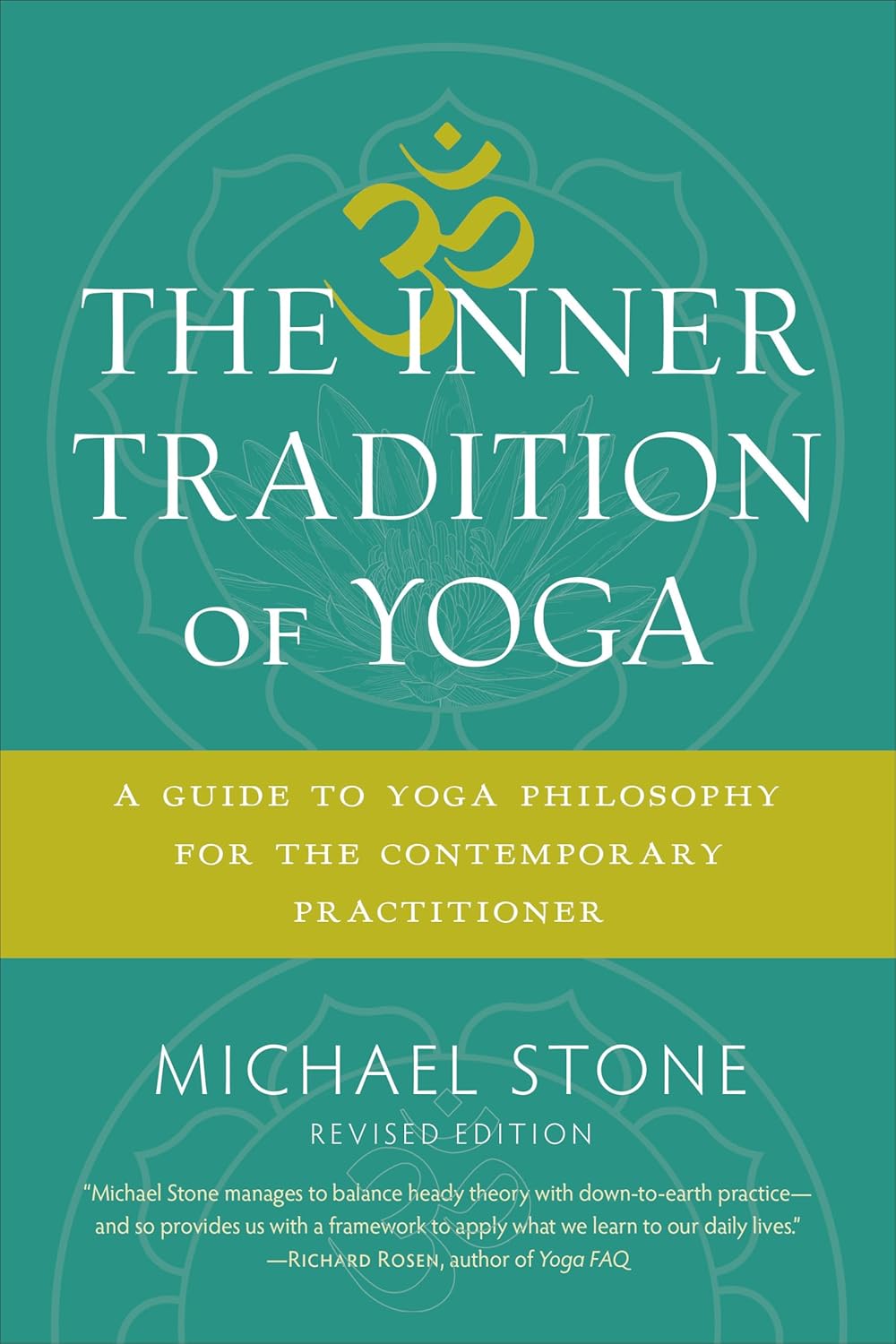
A wise, accessible guide that makes the spiritual and ethical teachings of the yogic tradition immediately relatable to our practice on the mat—and in our everyday relationships and activities
“There is no daily practice without some formal training; and there is no deep spiritual training without the mess of relational life. The two are one,” says Michael Stone. At the root of yoga practice there is a vast and intriguing philosophy that teaches the ethics of nonviolence, patience, honesty, and respect.
Innovative teacher Michael Stone draws from numerous disciplines—including Buddhism and psychotherapy—to provide an in-depth, completely clear explanation of yogic philosophy, along with teachings on how to bring our understanding of yoga theory to deeper levels through our practice on the mat—and through our relationships with others. Yoga, says Stone, is a practice that helps us be more present with the actual, fluid life we are living right now—and there is no yoga without the conditions of your life. This book describes how to work with those conditions and how to fully appreciate yoga as a practice of being intimate with moment-to-moment reality.
Publisher : Shambhala; Revised edition (July 17, 2018)
Language : English
Paperback : 264 pages
ISBN-10 : 1611805910
ISBN-13 : 978-1611805918
Item Weight : 2.31 pounds
Dimensions : 6.08 x 0.8 x 9 inches
Customers say
Customers find the book helpful for understanding yoga philosophy. They describe the words as simple, easy to read, and well-written. The philosophy is broken down into principles that are accessible and understandable. Readers consider it a must-read for yoga enthusiasts.


R. Gahan –
A must read for anyone beginning to study yogic philosophy and the sutras.
This was one of the best yoga books I have read so far. Here is what I had to say about it on my blog in March 2009:I have two translations of The Yoga Sutras, and I will admit that for the past three or four years I have been stuck on two of the sutras. The words are simple, but I have not been able to wrap my mind around them. I have discovered that the yoga sutras are not something to read from start to finish. So, how do you even get an overview of what may be in them? Where do you start if you want to learn more about yoga beyond asana and the eight limbs?I recently finished a book that has given me some more foundational knowledge: The Inner Tradition of Yoga by Michael Stone. He has an understanding to the point where he can apply theory to our everyday living and write about it for those of us just beginning to explore yogic theory in earnest. In Inner Tradition, he unpacks what the sutras say about suffering and brings definition and clarity to them. He also outlines the subtle bodies, or dosas, in a way that is easily understood, accessible, and grounded. In the beginning, he introduces this book to be about the psychological experience of a committed yoga practice and the letting go that must happen if a practice is to deepen and expand. Instead of being about postures and how to deepen them, this book is about how a yoga practice can be experienced and cultivated in our lives. He remains true to his aim, which is to introduce yogic theory to modern day Westerners and apply this theory to what we face in our day to day lives.Yoga oftentimes is treated as just a physical practice, with the deeper aspects denied or ignored. I think that many are fooled that by practicing postures alone, we will become enlightened, or at the very least wiser. It’s like saying that going to an aerobics class makes us wise. It could, but what is required is that we bring a awareness to what we are doing and a willingness to explore ourselves internally. A physical practice without a mindfulness practice only cultivates the separation of who we truly are from what we want to be (a.k.a. narcissism). Physical practice includes any kind of workout, and one form of yoga is a physical workout.Here is an excerpt from page 12, “This book is about how to cultivate a yoga practice, what constitutes a yoga practice, how to recognize and work with the different stages on the path, and how to keep the tradition of yoga a living tradition through committed practice and critical engagement. On a heart level, this book is about the cultivation of patience, honesty, nonviolence, wisdom, and the ability to meet life as it occurs from moment to moment without habitual forms of clinging”The message throughout the book is to stay mindful during practice and from this, we begin to understand clearly the dimensions of the self and reality. With breath and asana, we stay grounded as understanding develops. Breath and asana are the classroom. We can pay attention or not, but to pay attention is to discover the richness of life because we are experiencing it directly and not through an emotional filter, a mental block, a belief, or any other construct of the mind.From page 14, “In the center of the human body we find the center of all things because when breath, mind, and body come together in an instant of experience, reality unfolds. Reality unfolds when the mind can stay completely present in a breath cycle, especially at the completion of an exhale. The exhale completes itself in the pelvic floor, the center of gravity, the resting place of the mind.”I appreciate that despite all the theory and concepts that he lays out, breath and asana are at the center of what each yoga practitioner must do. In the focus on breath and asana, we come to realizations about ourselves, and we come to accept these realizations. Using breath and asana as a vehicle to self realization keeps us grounded and closes the gap between who we truly are and what we want to be.He defines the causes of suffering and distinguishes them from the symptoms of suffering (also termed poisons of the heart). It is in this area of the sutras where I have gotten bogged down, and now, I can go back to them with more receptivity to what the sutras and their translators have to say about dukkha (suffering) and the klesas (poisons of the heart).Also, I keep going back to the way he describes how we process information. We receive data through our senses, our brains register the data, then we decide whether or not we like it. From there, we own it and hoard it away somewhere in our body. This can be a vicious cycle if we get stuck on the aversion track. It can also stunt us if it is the pleasure track. He points out that this cycle is the way an addiction forms. Addiction is like a scratched record. Through breath and letting go, we can nudge the needle off the repeating track and onward into the rest of what life experience has to offer us. This was one of the many aha moments that I had while reading the book.Side note about the broken record: I think we can unknowingly get stuck, even in a yoga practice. For instance, many of us think we aren’t doing anything if we don’t feel the pose where we think we should feel it. The shoulders and the spine can be a tricky like that. If we reach out, we may take our arms past our spine behind us bending the spine back by tilting the tailbone up thinking we need to feel the stretch in the pectoral muscles of the chest. But, really, just reaching the arms out while keeping the spine in a neutral position is what we need. From this position, we do not overstretch the shoulders, we can engage deep breathing much easier and the actual stretch in the chest will feel more like an unloading. And taking a load off our chests is exactly what we need most of the time.Since starting this post, I have gone to the sutras that have mystified me and don’t know why I got stuck. What I needed was a general picture, which is what Stone has provided with The Inner Tradition of Yoga. Now, I can pick up the sutras and take them one at a time and read the commentaries without feeling like a blind person being led by a stranger across uneven terrain.Books referred to in this post:The Inner Tradition of Yoga: A Guide to Yoga Philosophy for the Contemporary Practitioner by Michael StoneThe Yoga Sutras of Patanjali: Translation and Commentary by Sri Swami SatchidanandaThe Essence of Yoga: Reflections on the Yoga Sutras of Patanjali by Bernard Bouanchaud
Patricia Don Diego –
read this a lot
I’m afraid I can’t go into a great intellectual discussion about this book.But I do know this…my copy is getting worn out by reading it so much.It is highlighted and underlined….I enjoy it. I read it. The words in it have given me much to think about, much to try to understand. I have been attempting Ashtanga yoga for a while now, this book is giving me a deeper understanding of what I have been doing physically. There aren’t many books I read over and over. What could be better for an author to hear….I thank Michael Stone for the gift of his thoughts.
Teresa G. –
ancient values still apply today
If you’re not into learning Sanskrit that’s OK, you can get a lot out of Michael Stone’s summary of yogic philosophy and morality. It’s well written, though it becomes somewhat less cogent toward the end. I especially appreciate his reports of the interpretations from leading figures in the history of yoga. Worth a read for any serious student of yoga, or any person who is in the process of defining, refining, or learning to live by their own values.
louisa –
My favourite yoga philosophy book
Excellent easy to read and understand. Highly recommend
Dexter Taddei –
Wife liked it
Got as a present for my wife. She read from cover to cover..
Mike Cerneant –
Great Book
Michael Stone knows his stuff. Writes an incredible book on the history and philosophy of yoga. We are using this book in my teacher training program through CorePower Yoga. I’d buy this book even if it were not part of the program. Well written and great knowledge. I highly recommend.
Sherry –
Hidden gem
Great book full of gemstones. A book to have and read and then read again. He has some really good life stories to use as examples for yoga principles, not a quick read but and in depth read to learn from.
ERB –
Highly recommended!
I had to buy this book to start my teacher training to become a yoga teacher. It was really difficult to understand at the beginning, but once I got used to the style of writing and read the first chapter a second time, I really enjoyed it. If you are planning to buy this book, get some time to clear your head and focus the first chapter or two and it will be a breeze. You won’t regret buying it!
Rena Argiropulos –
Bought this for a training course, as recommended by out r instructor. looks straight forward, easy to read. Thanks
R B. –
Very thorough and encompassing of many texts whilst remaining accessible and very engaging. Quite a feat! Highly recommended to bring depth and understanding to your yoga practice.
Marcos –
Great book about yoga philosophy. Highly recommended.
Arely –
Semplice e diretto. Lettura obbligatoria per gli insegnanti di yoga. Questo libro è un bellissimo e raggiungibile approccio alla filosofia dello yoga.
Kylie –
This book is great for anyone new to yoga or a seasoned yogi. The messages can be processed and applied over and over each time contributing to greater happiness and joy.