



Price: $15.95
(as of Mar 18, 2025 01:52:00 UTC – Details)
“Using charts, drawings, and up-to-date scientific studies, they present the case that any brain, at any age, can change for the better…The authors suggest myriad activities to help the process along…(This is) A stimulating, challenging resource, full of solid information and practical tips for improving brain health.” -Kirkus Reviews
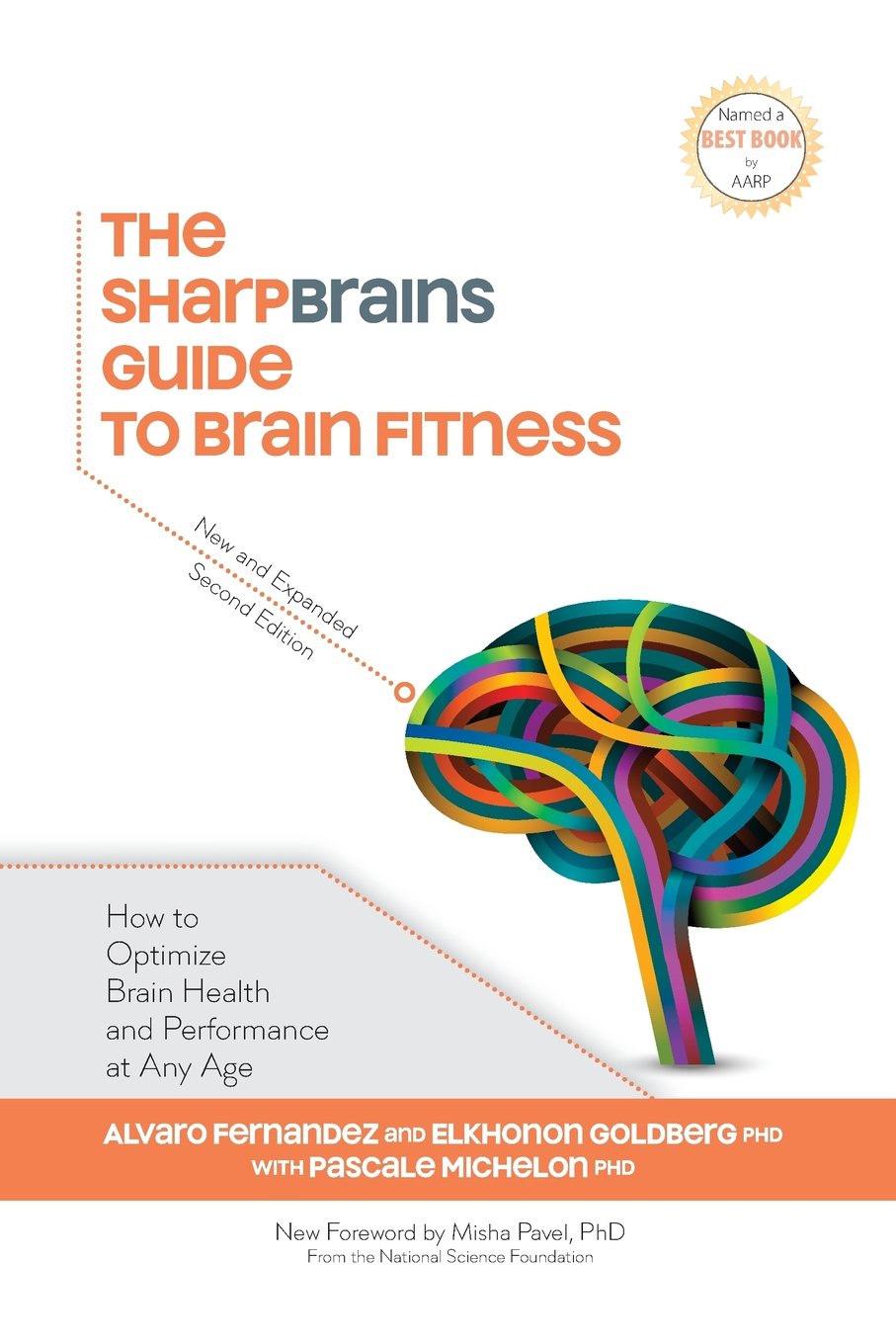
Modern life places extraordinary demands on our brains. Not only do we live longer than ever before, but we must constantly adapt to complex and rapidly evolving personal and professional realities. Yet, we often ignore our most precious resource to do so: our brain.
The SharpBrains Guide to Brain Fitness cuts through the clutter of misconceptions, superficial and conflicting media coverage, and aggressive marketing claims, to help readers discover what really works, and what doesn’t, to improve brain health and performance at any age, to delay or prevent cognitive decline, and become smarter consumers of both media coverage and scientific research in the process.
With useful, pragmatic and personalized tips and suggestions that are easy to implement, the SharpBrains Guide offers a groundbreaking new approach for self-assessing current brain fitness needs and identifying the most relevant and evidence-based methods to preserve and enhance brain function throughout life. Whether your goal is to become more resilient, enhance memory, ward off Alzheimer’s disease, or simply improve mental focus to perform better at work, this how-to guide shows you exactly how to “use it or lose it.”
This new and much-expanded edition of the guide AARP named a Best Book on Brain Fitness combines a user-friendly tutorial on how the brain works with advice on how to choose and integrate lifestyle changes and research-based brain training. Featuring an independent analysis of hundreds of scientific studies published in the last 10 years, the book also includes in-depth interviews with 20 leading scientists who often challenge conventional wisdom and prevailing brain health thinking and care.
A thought-provoking, practical and captivating read, the SharpBrains Guide makes the fascinating and complex subject of brain function and neuroplasticity easy to digest with its common sense approach. It’s time to rethink, and to truly apply, “use it or lose it.”
PRAISE FOR THE BOOK
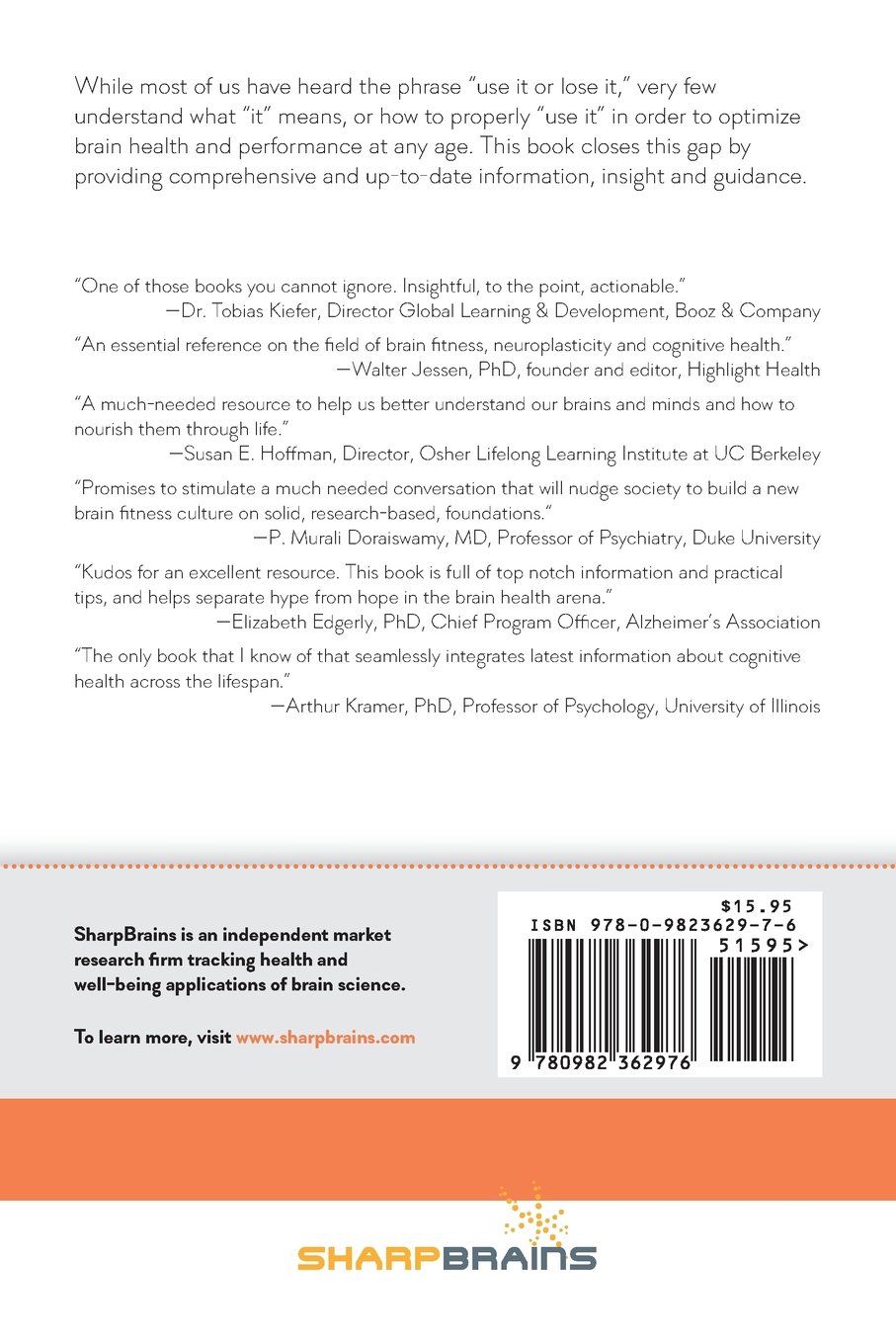
“One of those books you cannot ignore. Insightful, to the point, actionable. A book for leaders, innovators, thought provokers and everyone who wants to act and live smarter and healthier, based on latest neuroscience.” —Dr. Tobias Kiefer, Director Global Learning & Development, Booz & Company
“A great start for making sense new brain science and for taking active steps towards smart health, at the individual level, and Smart Health, at the societal level.” —Misha Pavel, PhD, Program Director for the National Science Foundation’s Smart Health and Wellbeing Program
“This is the book you need to begin to think differently about your brain and actively embrace the exciting and promising reality that your brain’s health is the cause of the century.” —Sandra Bond Chapman, PhD, Founder and Chief Director, UT-Dallas’ Center for BrainHealth
“An essential reference on the field of brain fitness, neuroplasticity and cognitive health” —Walter Jessen, PhD, founder and editor, Highlight Health
“A much-needed resource to help us better understand our brains and minds and how to nourish them through life.“ —Susan E. Hoffman, Director, Osher Lifelong Learning Institute at UC Berkeley
Publisher : SharpBrains Incorporated; New, Expanded edition (April 4, 2013)
Language : English
Paperback : 284 pages
ISBN-10 : 0982362978
ISBN-13 : 978-0982362976
Item Weight : 1.03 pounds
Dimensions : 6 x 0.64 x 9 inches
Customers say
Customers find the book provides a thorough understanding of how the brain works and practical strategies for improving brain health. They find it easy to read and understand, with a useful summary of key ideas at the end. The chapters on stress management, meditation, and exercise are appreciated. Readers consider the book a worthwhile investment and recommend it to anyone interested in improving their brain’s health. They also mention that staying fit is good for the body and brain.






Mel van Deventer –
Empowering, interesting & refreshing – a no nonsense approach to brain health.
With the growing occurrence of degenerative brain conditions in modern society, such as Alzheimer’s and dementia, comes an increased awareness and interest from people of all ages, in the preventative tools available to help slow the ageing process and improve general brain health and cognitive function. This book takes a no nonsense approach to the topic, offering a truly refreshing outlook on brain health and empowering readers with both the skills and knowledge needed to assess and improve their own brain performance.I have to admit I laughed when I first read the statement, “Brain fitness…much more than crossword puzzles and blueberries”, but in actual fact it isn’t a laughing matter. It is this very statement, I believe, that best highlights the feeling so many of us have about the meaning of brain health and fitness – confusion.All too often this confusion is caused by media entities trying to benefit from a selling headline, but this text casts out the would be profiteers and looks in-depth at the scientific research and studies – studies that have uncovered many interesting aspects about how the brain functions and the importance that neuroplasticity has throughout life. It also highlights the complementary nature of both physical and mental exercise in stimulating, understanding and improving cognitive performance; and then presents this information in an easy-to-understand manner for audiences of all ages and levels to enjoy, learn and adapt from themselves.The topics covered are divided into nine easy-to-follow chapters (listed below), with the content of each growing on knowledge obtained in the previous.1. Start with the brain in mind2. Be a coach, not a patient3. Mens sana in corpore sano (A healthy mind in a healthy body)4. You are what you eat and drink (to a point)5. Oh, the places you’ll go (Structural benefits of mental change)6. Oh, the people you’ll meet (Benefits of social engagement)7. Manage stress, build resilience8. Cross-train your brain; and finally,9. How to be your own brain fitness coachPersonally, coming from a family that recently discovered the effects of Alzheimer’s first hand, I jumped at the chance to read The SharpBrains Guide. Like so many other individuals and families in similar situations, I was hungry for knowledge, and I wanted more than the surface ‘facts’ the ongoing media coverage was providing me – I wanted facts and research studies that I could understand and put to use in my everyday life. One of the simplest learnings I have taken away from reading this text is the definition of neuroplasticity – which the guide defines as “rewiring the brain through experience”. I have a lot of experience, both positive and negative with this subject, but I plan to draw upon my own experiences, focusing on improving and better understanding my own neuroplasticity, so that I may help others around me to also improve their cognitive understanding and brain fitness.Without a doubt in my mind, I find this guide to be one of the clearest and most relatable texts I have read to date on the emerging, and constantly evolving subject of neuroplasticity; and taking a ‘use it or lose it’ approach, it drives home the ultimate message to all readers, even if you only choose to read snippets – that “brain fitness matters for life, and throughout life”. I would recommend this book to my family, friends and colleagues 100%.
Jennifer H. Yarrington –
Brain Fitness Turned on its….Head
My mother died from complications of dementia. So did my best friend’s dad. I have a dear friend with a (mild) TBI and I thought this was something we had to accept as part of life as we age or if you have head trauma- unlucky you. The book helped me understand that it doesn’t have to be that way. There are things we can do every day to improve out memories and keep dementia at bay, and improve brain function even after an injury. I was happy to discover I was already doing some of the “right things”: Moderate alcohol consumption, (yay! Red Wine!) a, a regular aerobic exercise at least a few days a week, a consistant sleep schedule.The book was laid out in such a way that you could skip around if there was a particular topic that you want to focus on or readable cover to cover. I confess, I skimmed over some of the interviews.Phew- no need to waste my money on supplements that have no benefit. I love yoga and my practice has fallen away in the last few years, so this has been another incentive to pick it back up- yoga is a meditative practice and that helps to boost memory and cognition. Other sggestions from the authors: I work at home so I could use more face- to face social interaction. My work requires analysis and is challenging and full of variety so that is another advantage. The breakdown of what is helpful and what isn’t helped me feel like at least I have some control rather than trying to keep up with the latest headline touting this or that latest finding or “cure”. I may still have issues with dementia later in life, just hoping that if I do as many of the right things as possible I can postpone/minimize the effects for as long as possible. Overall I enjoyed and recommend it.
GirlScoutDad –
Your Brain Will Thank You for Reading this Book
This book is a readable and thought-provoking introduction to the field of “brain training” or more broadly “brain fitness.” The authors clear away a number of misconceptions about brain fitness, and provide thoughtful guidelines for keeping your own brain well-nourished and robust at any age.They identify three primary aspects of ‘brain fitness’ including: promoting growth of neurons (“neurogenesis”), enhancing the connections between neurons (“neuroplasticity”), and keeping the brain active to stave off the harmful effects of aging or disease (building “cognitive reserve”). They also identify other factors in brain health including nutrition, oxidative damage and how to minimize it, and maintaining vascular health. The main body of the book consists of short chapters on activities or lifestyle changes that the reader can adopt to promote all these areas of brain fitness. A large number of topics are discussed including exercise, sleep, stress reduction, lifelong intellectual enrichment, computerized brain training programs, endeavors that involve novelty, variety, and challenge, the Mediterranean diet, supplements, social engagement, and meditation. Overall, an excellent – detailed yet readable – overview of how to optimize your brain health.I also enjoyed the authors’ debunking of a number of common misconceptions about brain fitness, including the idea that taking Gingko Biloba and doing a daily crossword puzzle will stave off Alzheimer’s disease. Turns out that to develop the “cognitive reserve” that preserves brain function, you need novelty and a variety of challenges because that’s what prompts the brain to create new synaptic connections (“neuroplasticity”); there is little gain in terms of increased brain fitness to doing your one millionth crossword puzzle, for example.Finally, the authors do a great service to readers by emphasizing throughout that different people have differing needs and priorities according to age and life circumstances, so everyone’s brain fitness program should be somewhat individualized. Consider: an elderly person wanting to preserve “working memory” and processing speed; an adolescent diagnosed with ADHD; an adult in mid-life coping with an overload of stressful demands. All these individuals have different priorities and the authors suggest individualized strategies for brain fitness.A major plus of this book is that the authors are careful not to make claims unwarranted by the current state of research. They are not trying to sell you a dietary supplement or computer program and therefore they come off as unbiased in their recommendations. They also include interviews with brain experts at the end of each chapter; these interviews help to reveal the extraordinary breadth and scope of current brain fitness research. Another book that I found very enjoyable and informative on the topic of understanding your own individual brain and maximizing its effectiveness is David Rock’s “Your Brain at Work.”
KKD –
Well rounded source of information on brain fitness
Antonio –
Testo interessante per chi ama il miglioramento della propria mente.
Brian Gibb –
Having bought several other books on the subject, I find that the Sharp Brains Guide gives an excellent overview of the subject. After each chapter, there are transcripts of interviews with subject matter experts that are very informative. For anyone not familiar with the subject, this easy to read book is the place to start.
Ramon Bartomeus –
El libro proporciona de forma ordenada y fácil de comprender los últimos avances científicos sobre el cerebro, de forma que cualquier persona interesada puede mejorar significativamente sus hábitos para obtener una vida más plena.
Jonathan Hobdell –
I think the important word in the title of this book is GUIDE. It provides a lot of information – and not just on brain training/fitness, but on considering what you need and how to analyse the appropriateness of media headlines, detailed information and industry recommendations.This book may not tell you EVERYTHING you want to know, but it’ll give you an excellent grounding and give you plenty of other directions/options to consider. I’m off to start my own research right now!